
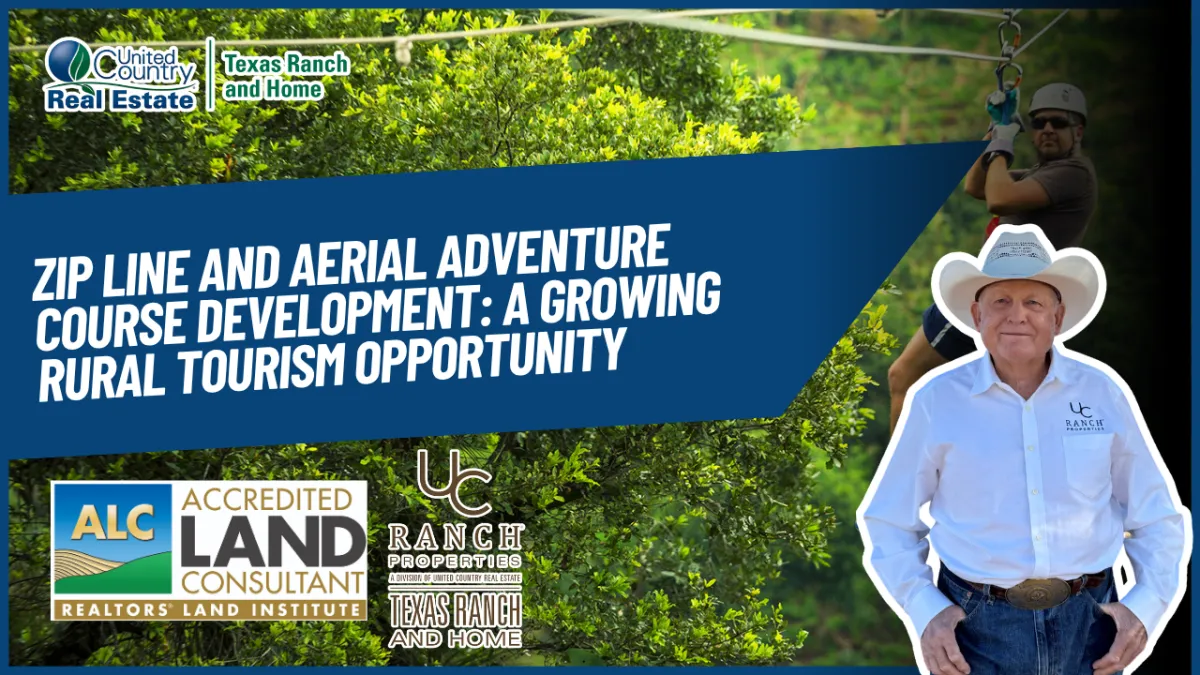
Zip Line and Aerial Adventure Course Development: A Growing Rural Tourism Opportunity
For South Texas properties with suitable terrain features — mature trees, elevation changes, or interesting natural topography — zip line and aerial adventure course development represents a genuinely growing rural tourism opportunity, offering visitors distinctive outdoor recreational experiences.
Why This Represents a More Substantial Development Category

Unlike some lower-cost recreational opportunities discussed elsewhere, zip line and aerial adventure course development typically requires more substantial infrastructure investment and specific engineering expertise, making this a genuinely more significant undertaking than simpler recreational land uses.
Key Property Characteristics Supporting This Development

Mature, healthy trees or other structural anchor points, providing the physical support infrastructure these courses require
Interesting elevation changes or natural topography, enhancing the genuine adventure appeal of the experience
Adequate scale, since meaningful courses typically require substantial acreage to create genuinely engaging, varied experiences
Why Professional Engineering Evaluation Is Absolutely Essential

Given the genuine safety considerations involved in aerial adventure structures, professional engineering evaluation and design is essential rather than optional, ensuring any course meets appropriate safety standards for supporting visitor weight and use over time.
Regulatory and Safety Considerations

Specific safety equipment and protocol standards, generally following established industry guidelines for this type of recreational activity
Regular safety inspection requirements, since ongoing structural integrity verification represents essential, continuous operational responsibility rather than a one-time consideration
Appropriate staff training, given the genuine technical knowledge required for safely operating and supervising these activities
Financial Considerations

Substantial infrastructure investment, representing genuinely significant capital costs compared to many other recreational land use options discussed elsewhere
Ongoing insurance costs, likely representing meaningful expense given the inherent activity risk involved
Realistic revenue potential, understanding that successful operations typically require sustained marketing investment to build genuine visitor awareness and demand
Why This Business Model Often Benefits From Professional Operational Partnership

Given the genuine specialized safety and operational expertise involved, some landowners partner with established adventure recreation companies specifically experienced in operating this type of attraction, rather than attempting to develop and manage all aspects independently.
Why Location and Accessibility Matter Significantly

Given that this type of attraction typically depends on drawing visitors specifically for the experience, reasonable proximity to population centers like San Antonio, combined with adequate road access and general visitor accommodation infrastructure, significantly affects realistic business viability.
Considerations for Evaluating an Existing Course

If you're considering a property with an already-established zip line or aerial adventure course, evaluate:
Current safety inspection and maintenance documentation
Structural condition of anchor points, platforms, and general course infrastructure
Historical visitor volume and revenue performance
Existing staff expertise and training documentation
Why This Represents Higher Risk and Higher Potential Reward Than Simpler Recreational Options

Compared to lower-infrastructure recreational opportunities discussed elsewhere, zip line and aerial adventure development involves genuinely higher capital investment and ongoing liability considerations, but also potentially higher revenue ceiling given the substantial, distinctive experience this type of attraction offers.
Questions to Ask Before Pursuing This Development
Does my property's terrain, trees, and general scale genuinely support quality course design?
What would professional engineering evaluation and design realistically cost for my specific property?
Would partnering with an established adventure recreation operator make more sense than independent development?
What realistic visitor demand exists given my property's proximity to population centers?
The Bottom Line
Zip line and aerial adventure course development represents a genuinely substantial, higher-investment South Texas tourism opportunity for properties with suitable terrain and adequate scale, requiring professional engineering expertise and significant ongoing safety and operational commitment. This represents a considerably more significant undertaking than simpler recreational land uses, warranting careful evaluation of both the substantial opportunity and genuine complexity involved.
Considering zip line or aerial adventure development potential for your Wilson County land?
James Peterson, ALC Broker/Owner — United Country Real Estate | Texas Ranch and Home Floresville, TX 78114
📞 James: 210-740-1295 🌐 www.txranchandhome.com 📅 Schedule a Free Land Consultation with James
James Peterson, ALC, is an Accredited Land Consultant and land expert serving Wilson County, Floresville, La Vernia, Stockdale, Poth, and South Texas.