

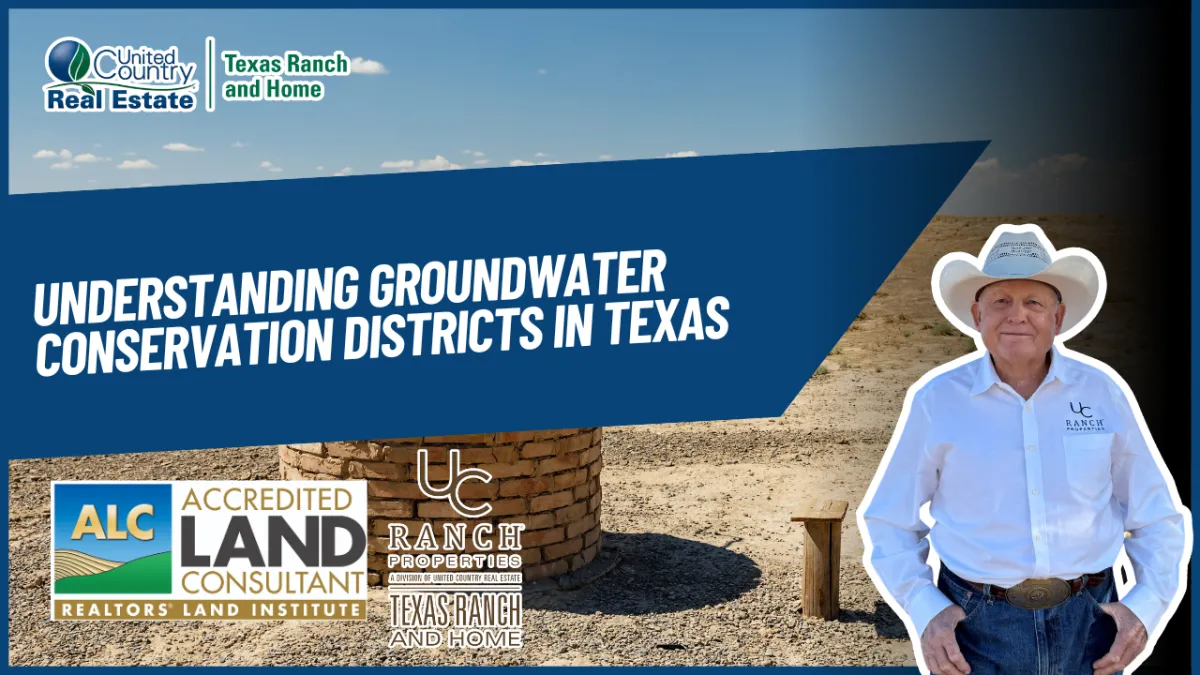
Understanding Groundwater Conservation Districts in Texas
Many Texas landowners are surprised to learn that owning land doesn't automatically mean unlimited rights to the groundwater beneath it. Groundwater conservation districts play a significant role in regulating well permitting, spacing, and in some cases pumping limits throughout much of Texas, including parts of South Texas. As an Accredited Land Consultant working throughout Wilson County, here's what landowners should understand about these regulatory bodies.
What Is a Groundwater Conservation District?

A groundwater conservation district (GCD) is a local governmental entity authorized by the state to manage and regulate groundwater resources within a specific geographic area. These districts were established to help balance the interests of individual landowners with the long-term sustainability of shared aquifer resources.
Why Groundwater Conservation Districts Exist

Texas follows the "rule of capture" for groundwater, generally allowing landowners to pump water from beneath their property. However, unchecked pumping across a shared aquifer can lead to significant depletion over time, affecting all landowners drawing from that same water source. GCDs were created to help manage this shared resource more sustainably.
What Groundwater Conservation Districts Typically Regulate

Well permitting — many GCDs require permits before drilling new wells, particularly for larger-capacity wells
Spacing requirements — rules governing how close new wells can be to existing wells or property lines
Pumping limits — some districts impose limits on the amount of groundwater that can be withdrawn, particularly for larger agricultural or commercial uses
Metering and reporting requirements — larger wells may be required to have meters and report usage data to the district
Why This Matters for Landowners and Buyers

Before drilling a new well or purchasing property reliant on well water, it's important to understand:
Whether the property falls within a groundwater conservation district's jurisdiction
What permitting requirements apply for existing or new wells
Any pumping restrictions that could affect intended agricultural, livestock, or household use
Whether existing wells on the property are properly permitted, which can affect both usability and future resale
How This Affects Agricultural and Livestock Operations

For working ranches and farms, understanding groundwater regulations is particularly important, since agricultural operations often require significant water use for irrigation or livestock watering. Confirming that current or planned water use complies with district regulations helps avoid potential penalties or usage restrictions down the road.
How This Affects Land Value

Properties with well-documented, properly permitted wells — particularly those with confirmed adequate capacity for the intended use — are generally viewed more favorably by buyers than properties with unclear or unpermitted well status. This is especially relevant for:
Agricultural buyers needing confirmed irrigation capacity
Buyers planning to drill new wells, who need to understand permitting requirements before committing to a purchase
Investors evaluating long-term water security for a specific property
Common Misconceptions About Groundwater Rights

"I own the land, so I own unlimited rights to the water beneath it." While Texas's rule of capture generally supports landowner pumping rights, groundwater conservation districts can impose meaningful permitting and usage regulations.
"All groundwater conservation districts have the same rules." Regulations vary significantly between districts, making it essential to confirm specific requirements for the district covering your particular property.
"Existing wells are automatically grandfathered with no restrictions." Depending on the district and well history, some existing wells may still be subject to metering, reporting, or other requirements.
Questions to Ask Before Buying Land With Well Water Needs
Does this property fall within a groundwater conservation district, and which one?
What permitting requirements apply to existing or new wells on this property?
Are there any pumping limits that could affect my intended agricultural or household use?
Is the existing well properly permitted, and is documentation available?
What is the district's process for obtaining a new well permit, if needed?
The Bottom Line
Groundwater conservation districts play an important regulatory role in managing Texas's shared water resources, and understanding how these regulations apply to a specific property is essential for landowners and buyers throughout Wilson County and South Texas. Confirming permitting status and applicable restrictions before finalizing a land purchase helps avoid unexpected complications down the road.
This article is educational and not legal advice. Always consult your local groundwater conservation district or a qualified water rights attorney regarding specific well and water use questions.
Have questions about groundwater regulations affecting a property you're buying or selling in Wilson County?
James Peterson, ALC Broker/Owner — United Country Real Estate | Texas Ranch and Home Floresville, TX 78114
📞 James: 210-740-1295 🌐 www.txranchandhome.com 📅 Schedule a Free Land Consultation with James
James Peterson, ALC, is an Accredited Land Consultant and land expert serving Wilson County, Floresville, La Vernia, Stockdale, Poth, and South Texas.