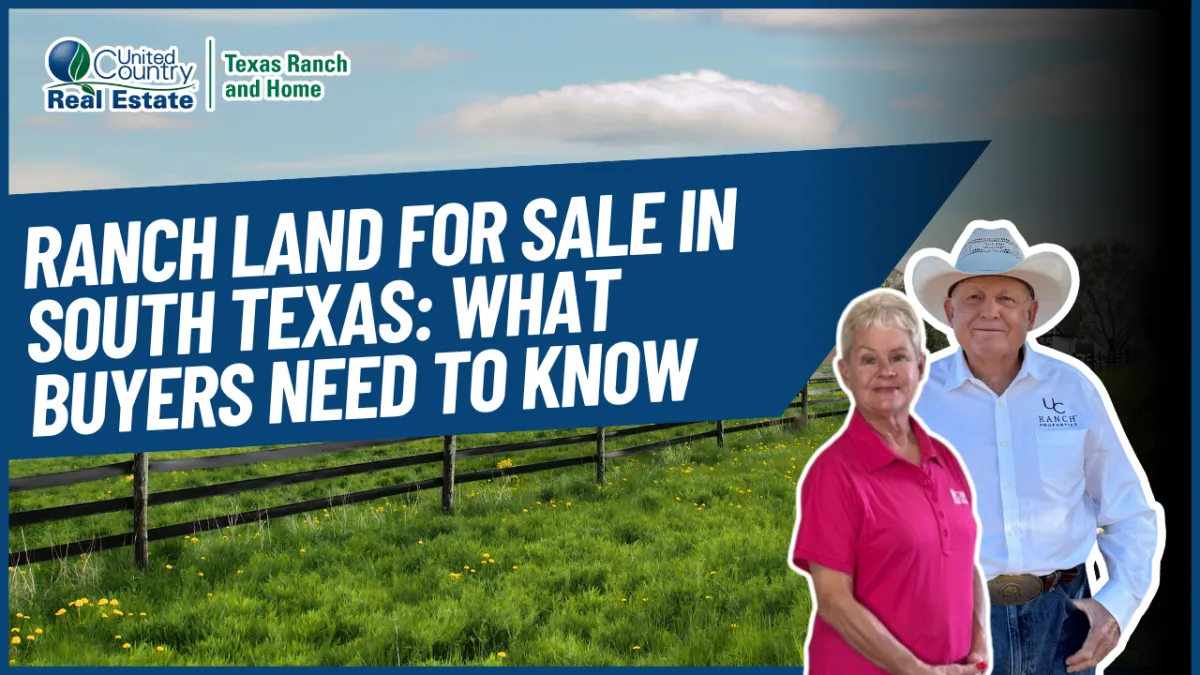
Ranch Land for Sale in South Texas: What Buyers Need to Know
South Texas ranch land is one of the most sought-after real estate assets in the country — and Wilson County sits squarely in the path of that demand.
Within an hour of San Antonio, you can own a working ranch, a hunting retreat, or a legacy property that your family can pass down for generations. The land is productive, the wildlife is abundant, and the combination of proximity to a major city and authentic Texas ranch character is something you simply can't find in most other states.
But buying a ranch in South Texas is not like buying a house. The due diligence is deeper, the financing is different, the legal landscape is more complex, and the mistakes are more expensive.
This guide is built to help buyers understand the South Texas ranch market — what's available, what it costs, what to look for, and what to avoid.
James Peterson, ALC and Barbara Peterson are broker-owners of United Country Real Estate | Texas Ranch and Home in Floresville, Texas. Ranch sales are one of their core specialties throughout Wilson County and South Texas.
What Makes South Texas Ranch Land Unique

South Texas has a character that experienced land buyers recognize immediately.

The brush country — South Texas is defined by native brush: mesquite, live oak, prickly pear, cedar, huisache, and a dozen other species that create the dense habitat whitetail deer, turkey, and hogs depend on. Managing this brush — selectively clearing senderos, maintaining food plots, keeping native habitat intact — is a science that the best South Texas ranchers take seriously.

The wildlife — South Texas produces some of the best whitetail deer hunting in the country. The genetics, the nutrition from native plants, and the hunting management programs maintained by the best ranches produce trophy-class bucks that draw hunters from across the country.
The land productivity — South Texas has a long history of cattle ranching on native and improved pasture. Coastal Bermuda, Klein grass, and native grasses support grazing operations throughout Wilson County. Many ranches run cattle alongside hunting programs, maintaining ag or wildlife valuation and diversifying income.
The proximity to San Antonio — Unlike the Trans-Pecos or deep South Texas brush country, Wilson County puts buyers within 25–60 minutes of a major metropolitan area. That's an enormous advantage for ranchers, second-home buyers, and investors who want access to the city while owning a genuine piece of Texas ranch country.
Types of Ranches Available in Wilson County
Weekend Hunting Ranches (20–100 Acres)
The entry point for most first-time ranch buyers. These properties typically have a cabin or hunting house, established feeders and blinds, some fencing, and water — all set up for hunting weekends without requiring full-time management. Wilson County has an active market for these in the $300,000–$800,000 range depending on improvements and location.
Working Cattle Ranches (100–500 Acres)

Properties set up for genuine cattle operations — improved pasture, working pens, water troughs and stock tanks, perimeter and cross-fencing, and enough acreage to run a meaningful herd. These ranches often carry strong ag valuation and may also have hunting value in the brush areas.
Multi-Use Ranches — Cattle, Hunting, and Homesite (100–1,000+ Acres)

The most desirable category for many buyers: a ranch that does everything. Cattle operation for productivity and ag valuation. Managed hunting for recreation and supplemental income or personal use. A home or ranch house for family living or weekend use. These properties require the most careful due diligence and typically command the strongest per-acre pricing.
Investment Tracts and Development Potential
Some Wilson County ranch land — particularly properties near La Vernia, Floresville, and the US-87 corridor — has longer-term development potential as the San Antonio metro continues to grow. Buyers purchasing these properties are often holding for a decade or more while using the land for cattle or wildlife in the interim.
Key Features That Drive South Texas Ranch Value

When James Peterson evaluates a South Texas ranch, these are the factors that most directly affect value:
Road Frontage and Access — County road or highway frontage is the foundation of any ranch's marketability. How much frontage, how many access points, and whether that access is paved or improved dirt all affect value and buyer demand.
Water — In South Texas, water is often the first thing serious ranch buyers ask about. Stock tanks (ponds), stock water troughs, creeks, wet-weather drains, and wells all factor in. A ranch with multiple reliable water sources is significantly more valuable than one that depends on a single point of water.
Brush and Habitat Quality — The character and density of the native brush directly affects hunting value. Properties with established senderos, mixed brush composition, and wildlife management history typically command stronger prices from hunting-oriented buyers.
Carrying Capacity — For cattle buyers, how many animal units the ranch can carry per acre is a critical metric. This depends on grass coverage, water, and land quality.
Improvements — Ranch house or cabin, working pens, loafing sheds, barns, equipment storage, water infrastructure, fencing condition — all of these add value when they're serviceable and detract when they're not.
Mineral Rights — Whether minerals convey with the surface is a major consideration in South Texas, particularly given Eagle Ford Shale activity in the broader region.
Ag or Wildlife Valuation — A ranch with established ag or wildlife valuation carries a significant tax advantage that adds long-term financial value to ownership.
What Does South Texas Ranch Land Cost Near San Antonio?
Land pricing in Wilson County and the surrounding South Texas region varies significantly based on the factors above. Current market ranges:
Basic hunting/pasture land without improvements: $3,500–$6,000/acre
Well-positioned hunting land with water, brush, and some improvements: $5,500–$9,000/acre
Improved working cattle ranch: $5,000–$9,000/acre
Multi-use ranch with home, water, managed habitat, strong location: $8,000–$15,000+/acre
Riverfront or premium habitat properties: Can exceed $15,000–$20,000+/acre
These are market ranges, not guarantees. Specific property value depends on what's on the ground. James Peterson's ALC training and years of Wilson County transaction data allow him to evaluate individual ranches accurately — not from a formula.
How South Texas Ranch Financing Works

Ranch financing is not residential financing. Here's what buyers need to understand:
Agricultural lenders are your primary option. Capital Farm Credit, AgTexas Farm Credit, and similar institutions specialize in rural land loans. They understand how to appraise agricultural property, how to factor in ag valuation, and how to structure loans for ranch buyers.
Down payments are typically 20–30%. Unlike residential mortgages with low down payment options, ranch land financing generally requires substantial equity from the buyer.
The appraisal process is different. Agricultural lenders use certified agricultural appraisers who understand how to value rural land — not residential appraisers applying standard methodology to ranch properties.
Cash buyers move faster. A significant portion of Wilson County ranch transactions involve cash buyers, particularly at higher price points. Cash removes financing contingencies and allows faster closings.
Ranch Due Diligence: What to Check Before You Buy
Before closing on any South Texas ranch, thorough due diligence should cover:
Survey confirming acreage and legal description
Title search and title commitment for liens, easements, and encumbrances
Mineral ownership confirmation — who owns them, any active leases
Well inspection (yield, quality, pump condition)
Stock tank and surface water assessment
Ag or wildlife valuation verification with the county appraisal district
Rollback tax exposure review
Fencing condition walkthrough
Floodplain mapping (FEMA)
Road and access confirmation (legal access, county maintenance status)
Improvements inspection (structures, pens, barns, water systems)
James and Barbara guide every ranch buyer through this checklist before closing. Skipping any of it is a risk.
Frequently Asked Questions About South Texas Ranch Land
Can I finance a South Texas ranch if I've never owned agricultural land? Yes. Agricultural lenders work with first-time land buyers. Your credit, income, and down payment will matter, as they would for any loan. James and Barbara can refer you to lenders they've worked with on Wilson County transactions.
How much land do I need to maintain ag valuation? It depends on the specific use and the county's intensity standards. In Wilson County, the appraisal district sets minimum requirements based on the agricultural activity. James and Barbara help buyers understand the thresholds before purchasing.
Is now a good time to buy ranch land in South Texas? Demand for rural land near San Antonio has stayed consistent. The long-term trend for well-located South Texas ranch land has been appreciation. For buyers with a clear purpose and a long-term view, finding the right property at the right price matters more than trying to time the market perfectly.
What is the best way to find ranch land for sale in Wilson County? Work with a local land specialist. The best properties often move quickly or sell through agent networks before they're widely listed. James and Barbara have their ears to the ground in Wilson County and surrounding areas.
Ready to Buy a South Texas Ranch?
James Peterson, ALC & Barbara Peterson Brokers/Owners — United Country Real Estate | Texas Ranch and Home Floresville, TX 78114
📞 James: 210-740-1295 📞 Barbara: 210-540-6487 🌐 www.txranchandhome.com 📅 Schedule a Free Ranch Consultation
James Peterson, ALC & Barbara Peterson are broker-owners of United Country Real Estate | Texas Ranch and Home in Floresville, Texas. James holds the Accredited Land Consultant (ALC) designation from the REALTORS® Land Institute — the highest professional credential in land real estate.