Horse Property for Sale in Wilson County, Texas: What Equestrian Buyers Need to Know
Wilson County, Texas is horse country.
The climate is mild, the land is open, hay production is well-established, and the combination of affordable acreage and close San Antonio proximity has made it one of the most active markets for equestrian property in the South Texas region.
If you're looking for land for your horses — whether that's a 5-acre homesite with a barn or a 100-acre training facility — Wilson County has options across every budget and ambition level.
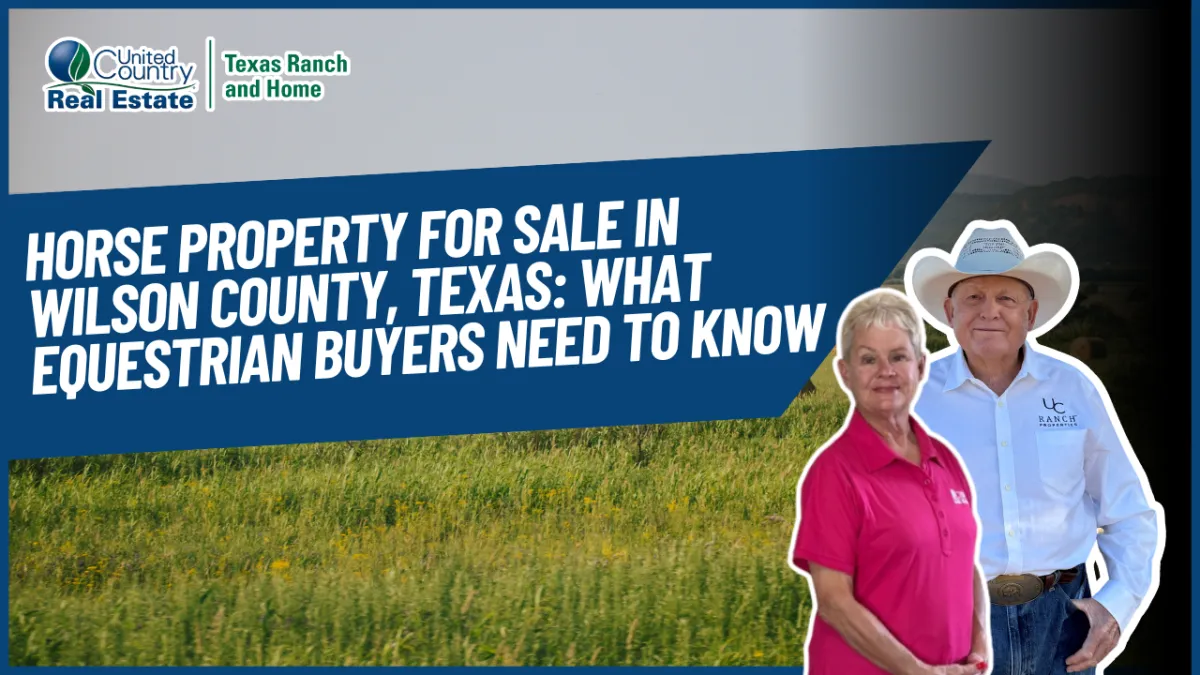
James Peterson, ALC and Barbara Peterson are broker-owners of United Country Real Estate | Texas Ranch and Home in Floresville, Texas. Equestrian and horse-friendly properties are among the most common buyer requests they work with. This guide covers what you need to know before starting your search.
What Makes Wilson County Good for Horses

Several factors make Wilson County well-suited for horse ownership:
Climate — South Texas has mild winters that allow year-round turnout and outdoor riding in most months. Summers are hot, but most horse owners here manage heat with fans, shade, and early morning riding — standard practice throughout Texas.
Land availability — Wilson County has consistent inventory of 5–50+ acre properties suitable for horse keeping. Unlike Bexar County, where small lots and deed restrictions make horse ownership difficult or impossible, Wilson County regularly offers unrestricted land where equestrian use is practical and expected.
Hay production — Coastal Bermuda grass is widely grown throughout Wilson County. Landowners with sufficient acreage often produce their own hay, significantly reducing the cost of feed. Local hay is also widely available for purchase.
Equine community — Wilson County and the surrounding area have an established equestrian community — barrel racers, ropers, trail riders, hunters. The infrastructure that supports horse ownership (farriers, veterinarians, feed stores, equipment suppliers) is present and accessible.
Proximity to San Antonio — Equestrian facilities, training programs, and competitions in the San Antonio area are within reach from Wilson County. Buyers who compete or train can access those resources while owning land at a fraction of Bexar County prices.
Types of Horse Properties Available in Wilson County

Small Equestrian Homesites (2–10 Acres)

The most in-demand category. Three-to-five bedroom homes on 3–8 acres with room for a small barn or run-in shed, a corral or paddock, and enough pasture for 2–4 horses. These properties are ideal for pleasure riders and small horse families who want to keep horses at home without a full ranch operation.
Wilson County has consistent inventory of these in the $300,000–$600,000+ range depending on condition, location, and existing improvements.
Mid-Size Equestrian Properties (10–50 Acres)

Enough land for meaningful hay production, multiple paddocks or pastures, a proper barn with stalls, an arena, and a comfortable home. These properties are the sweet spot for serious horse owners who want a full equestrian setup without operating a commercial facility.
Properties in this range often carry ag valuation — which can dramatically reduce property taxes — because hay production or horse grazing qualifies as agricultural use in Wilson County.
Large Equestrian Ranches and Training Facilities (50–500+ Acres)

Working horse operations, breeding programs, training facilities, and large boarding operations occasionally come to market in Wilson County and the surrounding area. These properties are priced based on land, improvements, and operating capacity.
What to Look for When Buying Horse Property in Wilson County

Pasture Quality and Carrying Capacity
Not all acres are equal. The quality and composition of the grass, the soil drainage, and the overall condition of the pasture directly affect how many horses the land can support without overgrazing.
For Coastal Bermuda pasture in good condition, a rough rule of thumb is 1–2 acres per horse depending on management and supplemental feeding. Overstocked, degraded pastures take time and investment to restore.
Ask your agent — and any seller — about the stocking history and current pasture condition before making assumptions.
Water Sources and Availability
Horses drink 5–10 gallons of water per day, more in summer heat. Reliable water is non-negotiable.
Evaluate: well capacity, water trough setup, stock tanks (and their reliability in dry months), and whether the water system can be expanded if you add horses.
Existing Barn and Facilities
What's there matters — and so does whether it's actually usable.
Evaluate: number of stalls, stall size, aisle width, ventilation, hay storage capacity, feed room, wash rack, lighting, and condition of the structure. A barn that looks good from the outside can have serious issues — rotting wood, inadequate drainage, compromised roof — that require significant investment.
Arena and Riding Space
For buyers who need a riding arena — barrel racers, ropers, trainers, hunter/jumper riders — evaluate size, footing material, drainage, and lighting. Building or installing a proper arena is a real cost, so existing arenas in good condition add genuine value.
Fencing
Cross-fencing into multiple pastures allows rotation, which preserves grass quality and separates horses as needed. Evaluate fence type (pipe, board, high tensile, electric, or combinations), condition, and gate placement.
Perimeter fencing condition matters for security. A horse that can push through or jump deteriorated fencing creates liability and heartache.
Access Roads and Trailer Parking
Larger vehicles and horse trailers need to be able to navigate the property comfortably. Evaluate driveway width, surface condition, turnaround space, and whether trailer access to the barn area is practical.
Ag Valuation Eligibility
If you intend to maintain horses on the property and manage it actively, there's a reasonable basis for agricultural valuation depending on the use intensity and Wilson County standards. James and Barbara verify this with every rural buyer and help you understand what maintaining that valuation requires after closing.
Common Mistakes Horse Property Buyers Make
Not getting a well inspection. Sellers know what their well produces in good conditions. But a well that barely meets current household demand won't support horses added to the equation. Get a proper well inspection with yield testing.
Assuming all fencing is adequate. Walk every fence line before closing, not just drive by it. Deteriorated fencing on a horse property is a safety issue and a cost.
Not accounting for hay and feed costs in the budget. Land purchase is one cost. The ongoing cost of keeping horses — hay, feed, farrier, vet, equipment, water, repairs — is a separate budget consideration. Wilson County's hay production and local supplier network help keep these costs manageable.
Choosing property based on house quality over land quality. The house can be updated. The pasture, water, access, and land layout either work for horses or they don't. Prioritize land suitability first.
Not understanding deed restrictions or county rules. Some Wilson County subdivisions have deed restrictions that affect agricultural use or structures. Most rural Wilson County land is unrestricted, but verify before assuming.
Frequently Asked Questions About Horse Property in Wilson County
Can I keep horses in Wilson County without a large acreage? Yes. Depending on the specific property, location, and deed restrictions (or lack thereof), some buyers keep horses on 3–5 acres with supplemental hay. The smaller the acreage, the more intensive the management required.
Are there equine vets and farriers in Wilson County? Yes. The equine community in and around Wilson County is supported by local and regional veterinarians and farriers. San Antonio also has extensive equine veterinary resources accessible within an hour.
What is the minimum acreage to qualify horses for ag valuation in Wilson County? The intensity standards vary. James and Barbara recommend verifying directly with Wilson CAD before purchasing under the assumption that ag valuation will apply.
What is a horse property worth in Wilson County right now? Values range widely based on acreage, improvements, water, and location. James and Barbara provide accurate, data-based valuations for specific properties — not estimates built from regional averages.
Ready to Find Your Wilson County Horse Property?
James Peterson, ALC & Barbara Peterson Brokers/Owners — United Country Real Estate | Texas Ranch and Home Floresville, TX 78114
📞 James: 210-740-1295 📞 Barbara: 210-540-6487 🌐 www.txranchandhome.com 📅 Schedule a Free Consultation
James Peterson, ALC & Barbara Peterson are broker-owners of United Country Real Estate | Texas Ranch and Home in Floresville, Texas. They specialize in residential, land, and ranch real estate across Wilson County and South Texas.