
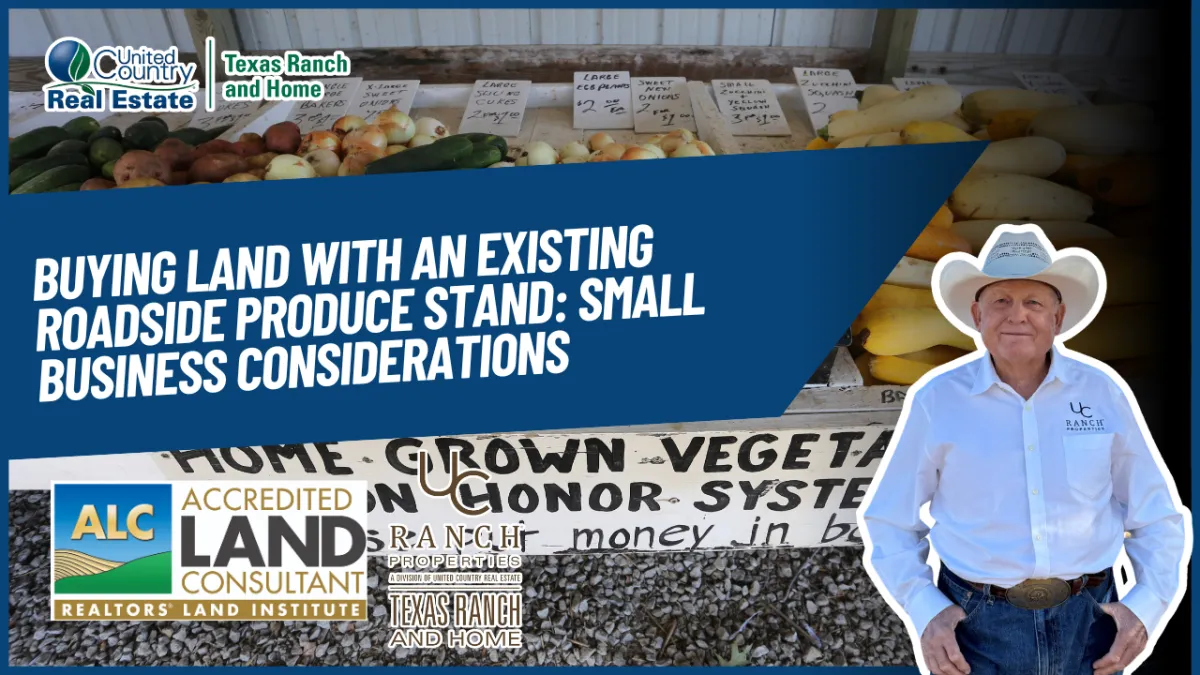
Buying Land With an Existing Roadside Produce Stand: Small Business Considerations
Roadside produce stands represent a longstanding South Texas agricultural tradition, offering landowners a straightforward way to generate direct-to-consumer income from their farm production. Understanding how to evaluate a property with an existing stand helps buyers assess both the real estate and this small business opportunity together.
Why Roadside Stands Remain a Viable Business Model

Direct-to-consumer sales, typically offering better margins than wholesale distribution channels
Relatively low infrastructure investment compared to more elaborate agritourism operations discussed elsewhere
Genuine community connection, since local produce stands often develop loyal, repeat customer relationships over time
Key Location Factors Affecting Stand Success

Road Traffic and Visibility
The single most important factor for a roadside stand's viability is genuine visibility and traffic volume, making road frontage on a well-traveled route significantly more valuable for this specific business purpose than a similar stand on a quieter road.
Safe Access and Parking
Confirm adequate, safe space for customers to pull off the road and park, since inadequate access can significantly limit a stand's practical customer volume regardless of traffic levels.
Proximity to Growing Areas
Understanding the relationship between the stand's location and the actual growing areas supplying its produce affects operational logistics and freshness, worth evaluating as part of your overall assessment.
What to Evaluate About an Existing Stand Structure

Physical condition, checking for weather damage or needed repairs
Utility access, if the stand includes any refrigeration or other powered equipment
Seasonal vs. year-round operation history, understanding the specific business's typical operating pattern
Regulatory Considerations

Local permitting requirements, confirming any necessary permits for operating this type of roadside sales business
Health department considerations, if applicable, particularly relevant for any value-added products beyond raw produce
Signage regulations, understanding any specific requirements for roadside advertising in the specific area
Financial Considerations

Historical sales patterns, requesting any available information about the stand's typical revenue and seasonal patterns
Realistic understanding of labor requirements, since staffing a roadside stand represents genuine ongoing operational commitment
Supply chain considerations, understanding whether produce comes from the property's own agricultural production or requires sourcing from elsewhere
Why This Business Complements Broader Agricultural Operations

For buyers already planning general farming or gardening operations, an existing roadside stand infrastructure provides a ready-made direct sales channel, potentially improving overall farm profitability compared to relying solely on wholesale distribution.
Considerations if You Don't Plan to Continue This Specific Business

If you're purchasing primarily for the underlying agricultural land without interest in continuing the specific roadside stand operation, consider:
Whether the existing structure has value for alternative uses
How this affects your overall property valuation, given the modest but specific investment this type of infrastructure typically represents
Questions to Ask About an Existing Roadside Produce Stand
What has historical sales volume and seasonal patterns looked like?
What specific permits or regulatory requirements currently apply to this operation?
What is the source of produce sold — the property's own production, or additional outside sourcing?
What labor arrangement has historically supported the stand's operation?
The Bottom Line
An existing roadside produce stand represents a genuine, relatively accessible small business opportunity for South Texas agricultural properties, particularly valuable when combined with strong road visibility and traffic access. Evaluating location factors, physical condition, and historical business performance helps buyers accurately assess this feature's contribution to their overall property investment.
Considering agricultural land with an existing roadside produce stand in Wilson County or South Texas?
James Peterson, ALC Broker/Owner — United Country Real Estate | Texas Ranch and Home Floresville, TX 78114
📞 James: 210-740-1295 🌐 www.txranchandhome.com 📅 Schedule a Free Land Consultation with James
James Peterson, ALC, is an Accredited Land Consultant and land expert serving Wilson County, Floresville, La Vernia, Stockdale, Poth, and South Texas.