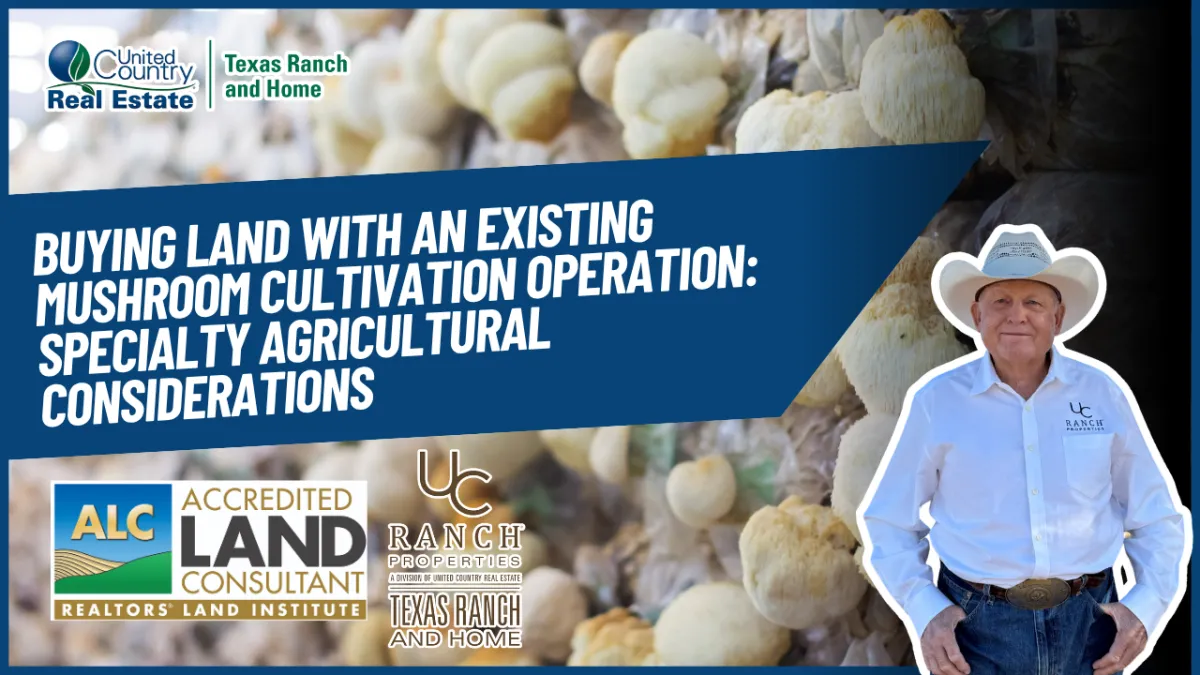
Buying Land With an Existing Mushroom Cultivation Operation: Specialty Agricultural Considerations
Given growing culinary interest in specialty and gourmet mushroom varieties, some South Texas properties include an established mushroom cultivation operation, representing a genuinely distinctive agricultural business quite different from more traditional regional farming approaches.
Why Mushroom Cultivation Represents a Genuinely Different Agricultural Category

Unlike typical field or orchard crops discussed extensively elsewhere, commercial mushroom production generally involves controlled indoor or covered environment cultivation, focusing on specific temperature, humidity, and substrate management rather than traditional field agriculture practices.
Why This Business Appeals to Certain Landowners

Controlled environment production, less directly dependent on typical South Texas weather variability than traditional outdoor crops
Growing culinary market demand, particularly for specialty varieties increasingly sought by restaurants and health-conscious consumers
Relatively space-efficient production, potentially generating meaningful revenue from smaller physical footprint compared to traditional field crops
Key Infrastructure to Evaluate

Growing Facility Condition
Confirm the condition of climate-controlled growing structures, since proper temperature and humidity management represents essential, specific infrastructure for successful mushroom production
Evaluate general facility construction and any specialized equipment supporting environmental control
Substrate Production or Sourcing
Understand how the operation sources or produces its growing substrate, since this represents an essential input affecting both production costs and quality.
Sanitation and Contamination Control Systems
Given mushroom cultivation's particular sensitivity to contamination, evaluate whether facilities include appropriate sanitation infrastructure supporting consistent, quality production.
Business and Financial Considerations

Specialized equipment value, representing genuine investment in climate control and production infrastructure
Existing market relationships, including any restaurant, farmers market, or wholesale distribution connections representing real business value
Realistic production and revenue patterns, understanding typical output and market pricing for the specific varieties produced
Why This Requires Specialized Knowledge Distinct From Traditional Farming

Given mushroom cultivation's unique environmental and biological requirements, this represents a genuinely specialized agricultural skill set, making prior mushroom cultivation experience or willingness to develop this specific expertise particularly important for buyers interested in continuing operations.
Regulatory Considerations

General food safety compliance, relevant to commercial mushroom production intended for sale
Any specific licensing applicable to your particular production and sales approach
Considerations for Buyers New to This Specific Agricultural Sector

If you're interested in continuing an existing operation but are new to mushroom cultivation specifically, consider:
The genuine technical learning curve involved in successful commercial mushroom production
Whether retaining existing knowledgeable staff would support your transition
Researching specific resources and potentially mentorship opportunities within the specialty mushroom growing community
Considerations if You Plan to Discontinue This Operation

If you're purchasing primarily for the underlying land or facility without interest in continuing mushroom production specifically, consider how existing climate-controlled infrastructure might be repurposed for alternative uses, since this type of specialized building could potentially support other controlled-environment agricultural applications.
Questions to Ask About an Existing Mushroom Cultivation Operation
What specific varieties are produced, and what has historical production volume and revenue looked like?
What is the current condition of climate control and sanitation infrastructure?
What existing market relationships would transfer with the business?
What genuine expertise or training would be needed to successfully continue this specific operation?
The Bottom Line
Land with an existing mushroom cultivation operation represents a genuinely distinctive South Texas agricultural business opportunity, requiring specific climate-controlled infrastructure and specialized technical knowledge quite different from traditional field agriculture. Thorough evaluation of facility condition, market relationships, and required expertise helps buyers make a fully informed decision about this unique specialty investment.
Considering land with an existing mushroom cultivation operation in Wilson County or South Texas?
James Peterson, ALC Broker/Owner — United Country Real Estate | Texas Ranch and Home Floresville, TX 78114
📞 James: 210-740-1295 🌐 www.txranchandhome.com 📅 Schedule a Free Land Consultation with James
James Peterson, ALC, is an Accredited Land Consultant and land expert serving Wilson County, Floresville, La Vernia, Stockdale, Poth, and South Texas.