

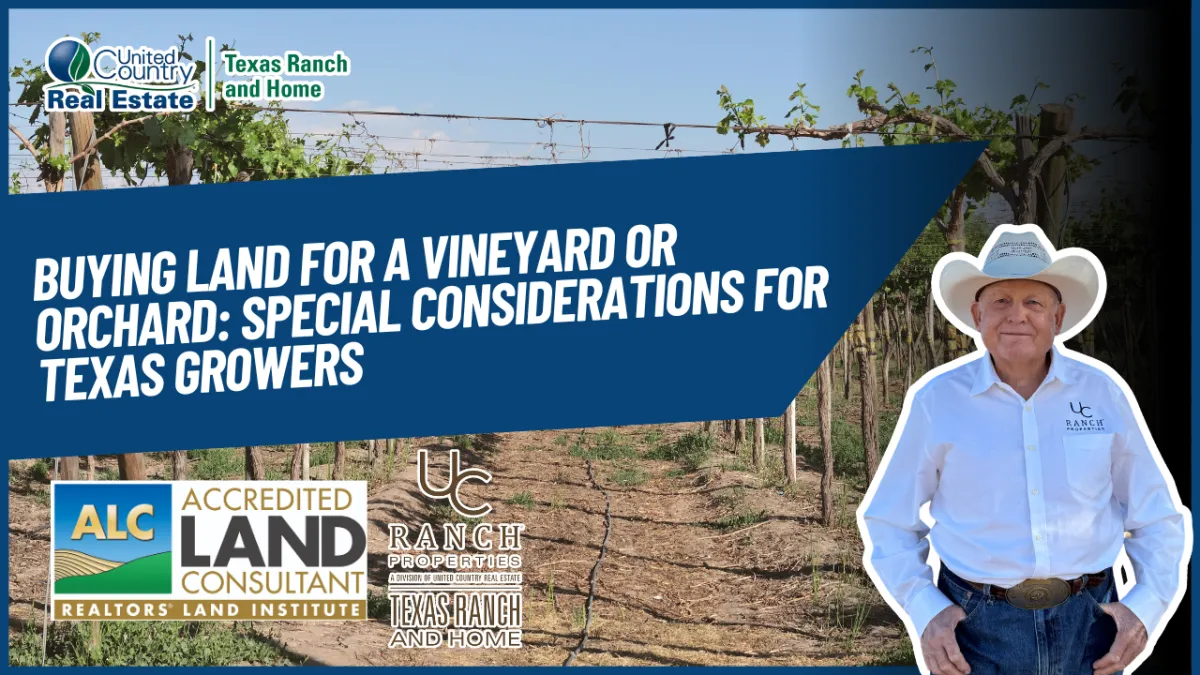
Buying Land for a Vineyard or Orchard: Special Considerations for Texas Growers
Texas has seen significant growth in vineyard and orchard operations in recent years, with growers increasingly looking beyond the traditional Hill Country wine region toward South Texas and Wilson County for suitable land. Whether you're planning a small hobby vineyard or a larger commercial orchard operation, evaluating land for these specific purposes requires a distinct set of considerations beyond typical agricultural land evaluation.
As an Accredited Land Consultant who helps buyers evaluate specialty agricultural land throughout Wilson County and South Texas, here's what growers should understand.
Why Consider Wilson County for Vineyards or Orchards

More affordable land costs compared to the increasingly competitive and expensive Texas Hill Country wine region
Diverse microclimates and soil types across the county, potentially suitable for specific varietals or fruit crops
Growing agritourism interest throughout South Texas, supporting potential direct-to-consumer sales models
Reasonable proximity to San Antonio, supporting both distribution logistics and potential agritourism visitor traffic
Soil Requirements for Vineyards

Grapevines have specific soil preferences that differ from typical pastureland requirements:
Well-draining soil is essential, since grapevines are particularly sensitive to standing water and root rot
Soil composition — certain soil types support specific varietals better than others; a professional soil analysis helps identify suitable options
Slope and elevation — gentle slopes often provide better drainage and can help reduce frost risk compared to low-lying areas
Soil Requirements for Orchards

Fruit and nut trees generally require:
Well-draining soil appropriate for the specific tree species being considered
Adequate soil depth to support root systems
Soil pH suitable for the specific crop, which can vary significantly between different fruit and nut varieties
Water Access and Irrigation

Both vineyards and orchards typically require reliable irrigation, particularly during establishment years and South Texas's hot, dry summers:
Well capacity — confirm adequate water availability and pumping capacity for the intended planting size
Irrigation infrastructure — existing drip irrigation systems or the cost of installing new systems significantly affects overall project budget
Water rights considerations, particularly important if any water sourcing involves surface water rather than groundwater
Climate and Microclimate Considerations

Frost risk — evaluating a property's specific frost patterns, since low-lying areas are more prone to frost damage than elevated or well-ventilated sites
Sun exposure — south and southeast-facing slopes often provide optimal sun exposure for grape and fruit development
Wind patterns, which can affect both pollination and potential crop damage
Evaluating Existing Vineyard or Orchard Properties

If you're considering a property with an established vineyard or orchard, evaluate:
Age and health of existing plantings
Varietals or species currently planted, and their market demand
Irrigation system condition and capacity
Historical yield data, if available
Any existing agricultural exemption status tied to the current operation
Agricultural Exemption Considerations

Vineyards and orchards can generally qualify for agricultural valuation, similar to other qualifying agricultural uses, provided they meet specific intensity and acreage requirements. Confirming these specifics with the county appraisal district is an important step for any grower planning a new operation.
Financial Considerations for New Growers

Establishing a new vineyard or orchard involves significant upfront investment:
Land preparation and soil amendment costs
Plant material costs, which vary significantly by varietal and quantity
Irrigation system installation
Multi-year establishment period before achieving meaningful production, often 3–5 years for vineyards
Agritourism Potential

Many Texas vineyard and orchard operations incorporate agritourism elements — tasting rooms, farm stands, or seasonal picking events — as an additional revenue stream. If this interests you, consider:
Road access and visibility for potential visitor traffic
Proximity to other agritourism destinations or wine trail routes
Zoning or deed restrictions that might affect commercial visitor operations
Questions to Ask Before Buying Land for a Vineyard or Orchard
What does soil testing reveal about suitability for my intended crop?
What is the property's frost risk based on elevation and drainage patterns?
What water access and irrigation infrastructure currently exists, or would need to be developed?
Does this property qualify for agricultural valuation under my intended use?
If considering agritourism, does the property have suitable road access and visibility?
The Bottom Line
Buying land for a vineyard or orchard requires specialized evaluation beyond typical agricultural land criteria — soil composition, drainage, frost risk, and water access all play a critical role in long-term success. Working with a knowledgeable land professional who understands these nuances helps ensure you select a property genuinely suited to your specific growing goals.
Considering land for a vineyard or orchard in Wilson County or South Texas?
James Peterson, ALC Broker/Owner — United Country Real Estate | Texas Ranch and Home Floresville, TX 78114
📞 James: 210-740-1295 🌐 www.txranchandhome.com 📅 Schedule a Free Land Consultation with James
James Peterson, ALC, is an Accredited Land Consultant and land expert serving Wilson County, Floresville, La Vernia, Stockdale, Poth, and South Texas.