

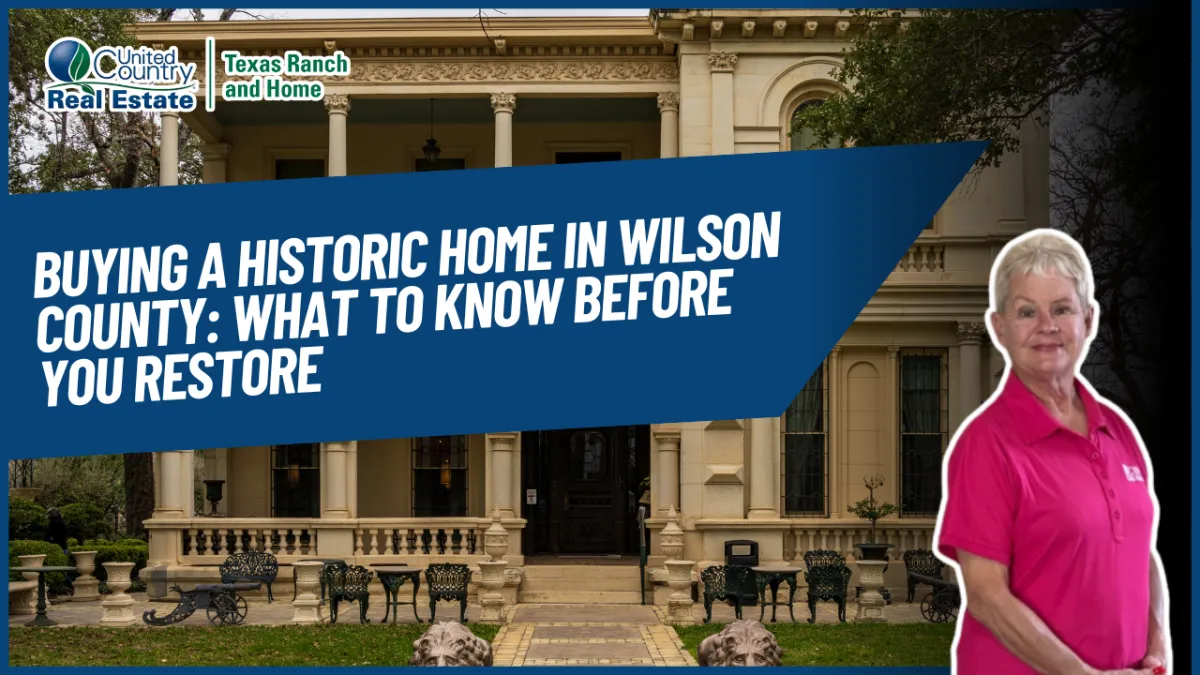
Buying a Historic Home in Wilson County: What to Know Before You Restore
Wilson County's rich history, dating back generations, means historic homes are a genuine part of the local landscape — particularly throughout Floresville and other long-established communities. For buyers drawn to the character and craftsmanship of an older home, there's real appeal, but also real considerations to work through before taking on a restoration project.
Why Buyers Are Drawn to Historic Homes

Architectural character unavailable in modern construction — original woodwork, high ceilings, and unique period details
Established neighborhoods with mature trees and a genuine sense of history
Larger lots, common with many older Wilson County properties
A connection to local heritage, particularly appealing to buyers invested in the community's history
Common Considerations With Historic Homes

Foundation and Structural Condition
Older homes, particularly those built before modern building codes, may have foundation settling or structural considerations that require professional evaluation. A thorough inspection is essential before committing to a purchase.
Electrical and Plumbing Systems

Many historic homes have been updated over the years, but it's important to confirm:
Whether the electrical system has been modernized to safely support current-day usage
Plumbing material and condition, since some older systems may need updating
Whether any updates were completed with proper permits
Roof and Structural Elements

Older roofing systems and structural elements should be carefully evaluated, since repair or replacement costs on historic homes can sometimes be higher due to specialized materials or techniques required to maintain the home's character.
Lead Paint and Asbestos Considerations
Homes built before 1978 may contain lead-based paint, and older insulation or building materials may contain asbestos. These aren't necessarily deal-breakers, but they're important to understand and address safely if renovation work is planned.
Historic Designation Considerations

Some historic properties may carry an official historic designation, which can affect:
Renovation and restoration requirements, potentially limiting certain modifications to preserve historic character
Available tax incentives or grants for qualifying restoration work
Insurance considerations, since some historic materials or features may require specialized coverage
It's important to confirm whether a specific property carries any historic designation before assuming full renovation flexibility.
Budgeting for Restoration

Restoring a historic home often costs more than renovating a comparable modern property, due to:
Specialized materials needed to match original architectural details
Skilled labor requirements for historic preservation techniques
Potential surprises once walls, floors, or systems are opened up during renovation
Building in a significant contingency budget — often 20% or more above initial estimates — helps account for the unpredictability common in historic home restoration.
Steps to Take Before Buying a Historic Home

Get a thorough professional inspection, ideally from an inspector experienced with older homes
Research the property's history, which can reveal past renovations, additions, or known issues
Confirm any historic designation status and understand associated requirements or benefits
Get contractor estimates for anticipated restoration work before finalizing your purchase decision
Understand realistic timelines, since historic restoration often takes longer than standard renovation projects
Financing Considerations for Historic Homes

Depending on the extent of needed renovations, financing options may include:
Standard conventional financing for homes in good structural condition
Renovation loans, such as FHA 203(k), which allow buyers to finance both purchase and renovation costs together
Specialized historic preservation loan programs, where available, which may offer favorable terms for qualifying restoration projects
Weighing the Rewards Against the Realities

Restoring a historic home can be a deeply rewarding project, preserving a piece of Wilson County's heritage while creating a genuinely unique home. But it requires realistic expectations about cost, timeline, and the specialized nature of historic preservation work.
Questions to Ask Before Buying
What is the true condition of the foundation, electrical, and plumbing systems?
Does this property carry any historic designation, and what does that mean for renovation flexibility?
What would realistic restoration costs look like, based on contractor estimates?
Are there any tax incentives or grants available for qualifying restoration work?
What is a realistic timeline for the restoration work I'm planning?
The Bottom Line
Historic homes offer genuine character and a connection to Wilson County's rich heritage, but they require careful evaluation and realistic budgeting before committing to a purchase. With thorough inspection, honest cost estimates, and a clear understanding of what restoration truly involves, a historic home can become a cherished, one-of-a-kind property.
Considering a historic home in Wilson County?
Barbara Peterson Broker/Owner — United Country Real Estate | Texas Ranch and Home Floresville, TX 78114
📞 Barbara: 210-540-6487 🌐 www.txranchandhome.com 📅 Schedule a Free Buyer Consultation with Barbara
Barbara Peterson is a residential real estate expert serving Wilson County, Texas, and the surrounding communities of Floresville, La Vernia, Stockdale, Poth, Pleasanton, Elmendorf, Adkins, and Sutherland Springs.